TIG Welding Answer Summary
- TIG welding offers precise control when joining aluminum and stainless steel.
- It produces clean, high-quality welds suitable for specialized industrial applications.
- Proper surface preparation, equipment settings and welder expertise are essential for reliable results.
Aluminum and stainless steel are widely used across industries because of their strength, corrosion resistance, lightweight properties and durability. However, joining these metals requires precision, suitable equipment and careful heat management. This is where Tungsten Inert Gas (TIG) welding plays an important role.
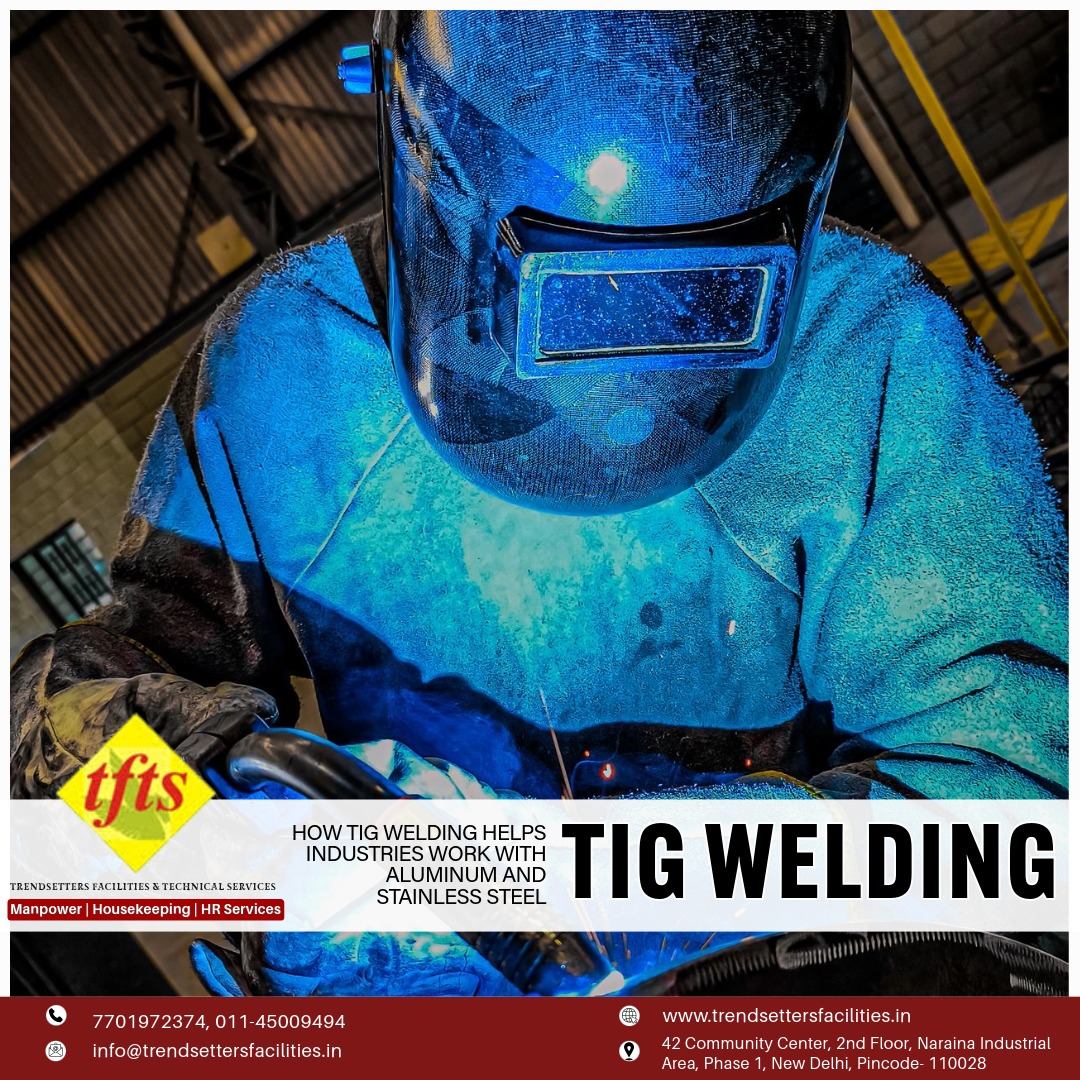
Also known as Gas Tungsten Arc Welding (GNAW), TIG welding uses a non-consumable tungsten electrode to create an electric arc that melts the metal. An inert shielding gas, usually argon, protects the welding area from atmospheric contamination. Filler metal can be added separately when required.
Its ability to produce clean, precise and controlled welds makes TIG welding particularly useful in industries working with aluminum and stainless steel shares TFTS a supplier for skilled TIG Welders for SME, MSME sectors in India.
Why Is TIG Welding Suitable for Aluminum and Stainless Steel?
Aluminum and stainless steel have different physical and chemical properties, making their welding requirements distinct.
Aluminum has high thermal conductivity and a relatively low melting point. It also develops a thin oxide layer that melts at a much higher temperature than the base metal. TIG welding, particularly with alternating current (AC), helps manage this oxide layer while providing controlled heat input.
Stainless steel, on the other hand, requires careful temperature management to minimize distortion and preserve its corrosion-resistant properties. TIG welding offers precise control over heat and filler material, helping produce clean joints with minimal spatter.
“TIG welding plays an important role in precision fabrication, particularly when working with aluminum and stainless steel. The ability to control heat input, maintain weld quality and achieve a clean finish makes it a valuable process for industries where accuracy and durability are essential.” Says Mr. Atul Mahajan, Director of Trendsetters Facilities and Technical Services (TFTS).
How Does TIG Welding Improve Industrial Fabrication?
One of the biggest advantages of TIG welding is the level of control it provides during fabrication. This makes it suitable for applications where weld appearance, accuracy and joint quality are important.
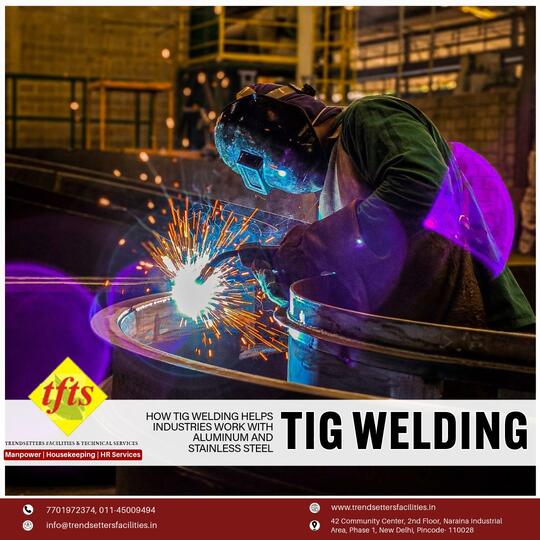
Key advantages include:
- Precision: Allows welders to control the arc and filler material accurately, making it suitable for thin metal sections and detailed fabrication.
- Clean welds: Produces minimal spatter and reduces the need for extensive post-welding cleaning.
- Strong joints: Creates high-quality welds when appropriate procedures and parameters are followed.
- Versatility: Can be used on different thicknesses and grades of aluminum and stainless steel.
- Controlled heat input: Helps reduce distortion and damage to surrounding material when welding conditions are properly managed.
These features make TIG welding valuable in fabrication environments where consistent results and dimensional accuracy are essential.
Which Industries Benefit from TIG Welding?
Several industries use TIG welding because of its ability to join metals with precision and consistency.
| Industry | Common Applications |
| Automotive | Exhaust systems, aluminum components and custom fabrication |
| Aerospace | Lightweight structural components and precision assemblies |
| Food processing | Stainless steel tanks, pipelines and equipment |
| Pharmaceutical | Hygienic stainless steel vessels and piping systems |
| Construction | Metal frameworks, architectural components and fittings |
In food processing and pharmaceutical facilities, clean stainless steel welds are particularly important because poorly finished joints can create areas where contaminants accumulate.
What Precautions Are Important When TIG Welding?
Although TIG welding offers several advantages, achieving high-quality results requires proper preparation and technical expertise.
Aluminum surfaces must be cleaned thoroughly to remove oil, dirt and oxide contamination. Stainless steel requires suitable filler material and controlled heat input to minimize distortion and maintain corrosion resistance.
Other important considerations include:
- Selecting the correct tungsten electrode and filler material.
- Using appropriate shielding gas and gas flow settings.
- Maintaining suitable welding current and travel speed.
- Ensuring proper joint preparation and alignment.
- Providing adequate ventilation and using appropriate protective equipment.
Welder skill is equally important. Incorrect settings or poor technique can result in porosity, cracking, incomplete fusion or weak joints.
Why Does TIG Welding Matter for Modern Manufacturing?
Modern manufacturing increasingly demands components that are lightweight, durable, dimensionally accurate and capable of performing reliably under different operating conditions. TIG welding supports these requirements by offering controlled metal joining with a high-quality finish.
Its suitability for aluminum and stainless steel makes it a valuable process across specialized fabrication, industrial equipment manufacturing and precision engineering.
A Welding Industry Perspective
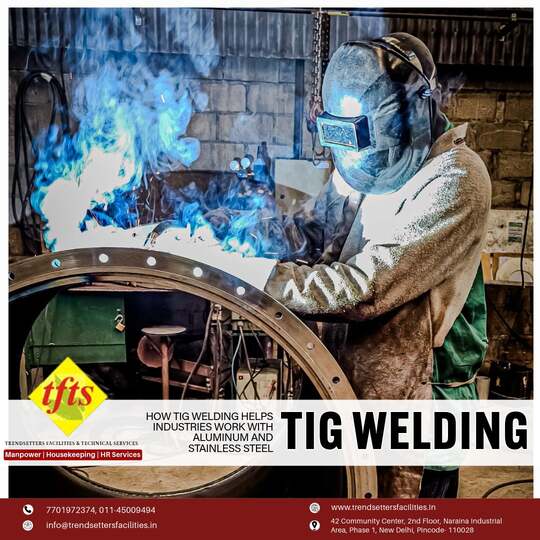
TIG welding is not simply about joining two metal pieces. It is about achieving the right combination of precision, strength and finish. When working with aluminum and stainless steel, selecting the correct welding process and maintaining consistent quality standards can significantly influence the performance and durability of the finished component.
Frequently Asked Questions
1. Why is TIG welding preferred for aluminum and stainless steel?
TIG welding offers precise heat control, clean welds and minimal spatter. It is particularly useful for joining thin metal sections and applications requiring accuracy and a high-quality finish.
2. Can TIG welding be used for industrial applications?
Yes. TIG welding is widely used in automotive, aerospace, food processing, pharmaceutical and construction industries for fabricating components, pipelines, tanks and precision assemblies.
3. What precautions are necessary when TIG welding aluminum and stainless steel?
Proper surface cleaning, correct electrode and filler material selection, suitable shielding gas and controlled heat input are essential. Skilled welding techniques also help prevent defects such as porosity, cracking and incomplete fusion.

Trendsetters Facilities & Technical Services (TFTS) is India’s leading manpower & temporary staffing agency for the manufacturing, power, hospitality, automobiles, IT, and Banking sectors. At present TFTS is the leading manpower supplier to Indian SEZs in SIDCUL, Rudrapur, Udhampur, Haridwar, and JAIPUR World. Some of the prestigious TFTS clients are Delhi Metro Rail Corporation, Bajaj Automobiles, Reliance Infrastructure, Haldirams, HCL.
Trendsetters Facilities & Technical Services (TFTS) offers a range of high-quality services from a team of specialized technicians for –
Life Maintenance and Repair
Housekeeping Services for Homes, Offices, Industries, and Institutions.
HR Outsourcing
Payroll outsourcing services
ITI Certified CNC Operators
Certified TIG welders,
Marble polishing services,
Fire hydrant system maintenance and more.
To Get Quotes
Call Us at : 7701972374, 011-45009494
Email: info@trendsettersfacilities.in

