Summary
- Deep cleaning frequency depends on office size, workforce, and nature of operations, but monthly scheduling works as a reliable standard for most workplaces.
- High-traffic areas and certain industries require more frequent deep cleaning to maintain hygiene and prevent germ buildup.
- Regular deep cleaning improves employee health, reduces absenteeism, and enhances overall workplace productivity and professionalism.
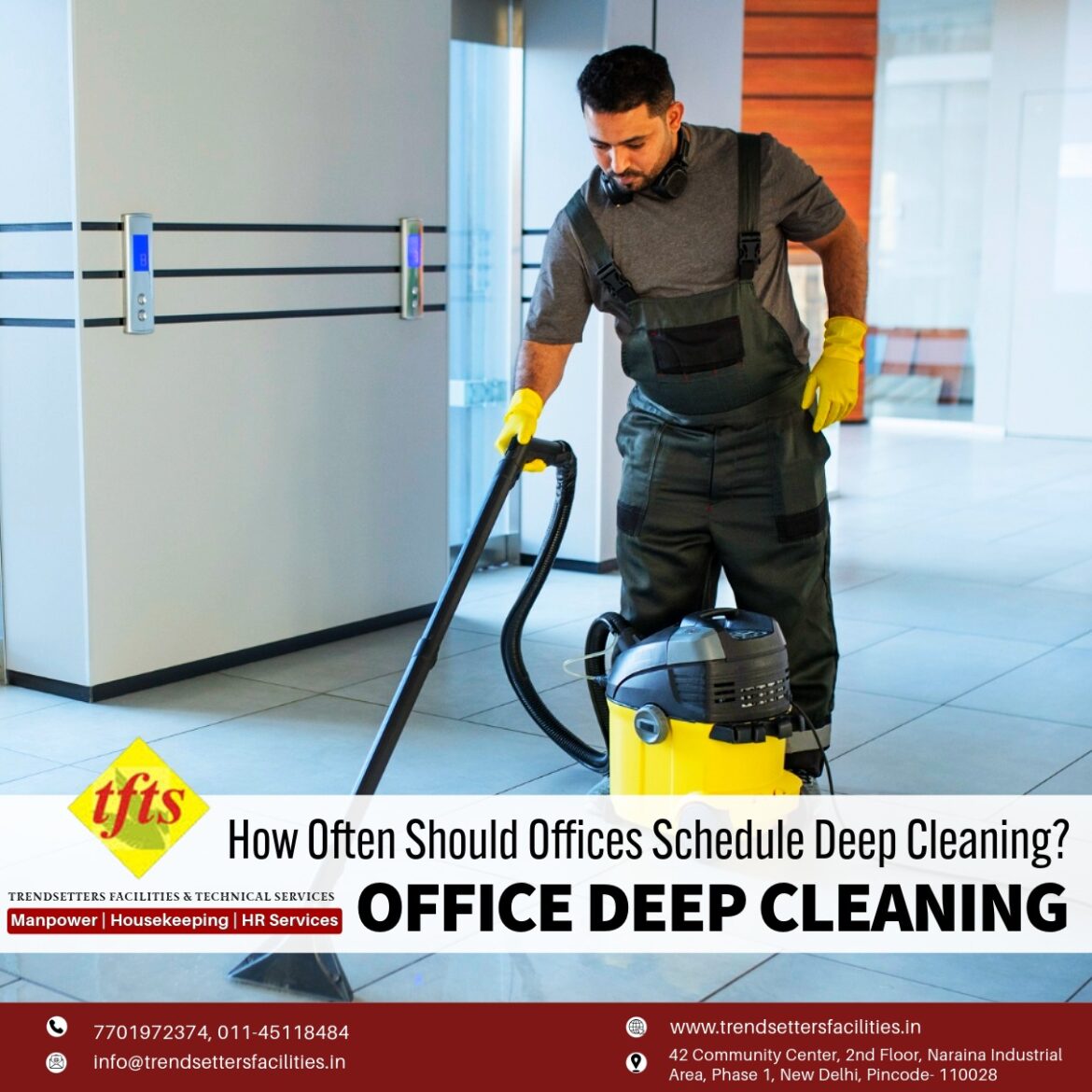
A clean office is more than just a matter of appearance—it directly influences employee health, productivity, and the overall impression your business leaves on clients. While daily cleaning handles visible dirt and routine hygiene, it often misses the deeper layers of dust, bacteria, and allergens that accumulate over time.
This is where deep cleaning becomes essential. Unlike regular cleaning, deep cleaning targets hidden areas, disinfects high-touch surfaces thoroughly, and ensures a healthier work environment. But the key question remains: how often should offices actually schedule deep cleaning? Shares TFTS a commercial deep cleaning agency for offices in Delhi, Gurugram and NOIDA.
How Often Should Offices Schedule Deep Cleaning?
The frequency of deep cleaning in offices depends on several factors, including the size of the workspace, the number of employees, the nature of work, and foot traffic. There isn’t a one-size-fits-all answer, but understanding these variables helps create an effective cleaning schedule that balances hygiene with cost.
Mr. Atul Mahajan, Director of Trendsetters Facilities and Technical Services (TFTS) says, “Deep cleaning isn’t an occasional task—it’s a strategic investment in workplace health, efficiency, and long-term business credibility.”
Office Size and Layout Matter
Larger offices with multiple cabins, meeting rooms, and common areas tend to accumulate dust and contaminants more quickly. More space means more surfaces, furniture, and hidden corners that are not addressed in routine cleaning. In such environments, scheduling deep cleaning at least once every month is generally advisable. Smaller offices, on the other hand, may function well with deep cleaning once every two to three months, provided daily maintenance is consistent.
Employee Strength and Usage Frequency
An office with a higher number of employees naturally experiences greater wear and tear. Workstations, keyboards, chairs, and shared amenities like cafeterias and restrooms are used more frequently, increasing the risk of germ buildup. Offices operating at full capacity should consider deep cleaning every 3–4 weeks. For workplaces with limited staff or hybrid working models, the frequency can be reduced slightly, but should not be ignored altogether.
Nature of Business Operations
The type of work conducted in an office plays a crucial role in determining cleaning needs. For instance, offices in healthcare, food-related industries, or customer-facing environments require more frequent deep cleaning due to stricter hygiene standards. In such cases, weekly or bi-weekly deep cleaning may be necessary. Conversely, corporate offices with minimal physical interaction may follow a less frequent schedule, such as once every month or quarter.
High-Traffic Zones Need Special Attention
Certain areas within an office demand more frequent deep cleaning regardless of the overall schedule. Reception areas, conference rooms, washrooms, and pantry spaces see constant movement and usage. These zones are hotspots for germs and dirt accumulation. Even if full-office deep cleaning is done monthly, these specific areas may require targeted deep cleaning every 1–2 weeks to maintain hygiene standards.
Seasonal and Situational Factors
There are times when offices should increase the frequency of deep cleaning beyond their regular schedule. Flu seasons, post-renovation periods, or after hosting large events can significantly increase contamination levels. During such situations, immediate deep cleaning helps prevent the spread of infections and restores cleanliness. Similarly, after long office closures, such as holidays, a thorough deep cleaning before reopening is highly recommended.
Impact on Employee Health and Productivity
Regular deep cleaning is not just about maintaining cleanliness—it directly affects employee well-being. Dust, allergens, and bacteria can trigger respiratory issues, allergies, and frequent illnesses, leading to absenteeism and reduced efficiency. A well-maintained environment promotes better focus, morale, and overall productivity. Investing in periodic deep cleaning ultimately saves costs associated with health-related disruptions.
Striking the Right Balance
The ideal deep cleaning schedule is one that aligns with your office’s specific needs rather than following a generic timeline. For most offices, a monthly deep cleaning routine serves as a reliable standard, with adjustments made based on workforce size, industry, and usage patterns. Combining this with consistent daily cleaning ensures that your workspace remains not only visually appealing but also safe and hygienic.
Recommended Deep Cleaning Frequency Table
| Office Type / Condition | Suggested Frequency | Reason |
| Small Office (Low Staff) | Every 2–3 Months | Less usage, slower dirt accumulation |
| Medium Office (Regular Staff) | Once a Month | Balanced usage and hygiene requirement |
| Large Office (High Staff) | Every 3–4 Weeks | Higher footfall and surface contamination |
| High-Traffic Areas (Pantry, etc.) | Every 1–2 Weeks | Constant usage, higher germ exposure |
| Healthcare / Food Industry | Weekly or Bi-Weekly | Strict hygiene standards |
| Post-Event / Renovation | Immediate Deep Cleaning | Removal of debris and contaminants |
| Seasonal (Flu / Illness Spread) | Increased Frequency (as needed) | Prevent infection spread |
In the end, deep cleaning should be seen as a proactive measure rather than a reactive one. Offices that prioritize it regularly create healthier environments, enhance employee satisfaction, and present a more professional image—benefits that go far beyond just cleanliness.

Trendsetters Facilities & Technical Services (TFTS) is India’s leading manpower & temporary staffing agency for the manufacturing, power, hospitality, automobiles, IT, and Banking sectors. At present TFTS is the leading manpower supplier to Indian SEZs in SIDCUL, Rudrapur, Udhampur, Haridwar, and JAIPUR World. Some of the prestigious TFTS clients are Delhi Metro Rail Corporation, Bajaj Automobiles, Reliance Infrastructure, Haldirams, HCL.
Trendsetters Facilities & Technical Services (TFTS) offers a range of high-quality services from a team of specialized technicians for –
Life Maintenance and Repair
Housekeeping Services for Homes, Offices, Industries, and Institutions.
HR Outsourcing
Payroll outsourcing services
ITI Certified CNC Operators
Certified TIG welders,
Marble polishing services,
Fire hydrant system maintenance and more.
To Get Quotes
Call Us at : 7701972374, 011-45009494
Email: info@trendsettersfacilities.in