Office Cleaning: Direct Answer Summary
- Identify overlooked surfaces, ventilation outlets, and dust-collecting areas.
- Use suitable cleaning methods to prevent dust from spreading during cleaning.
- Maintain regular housekeeping schedules for floors, furniture, and shared spaces.
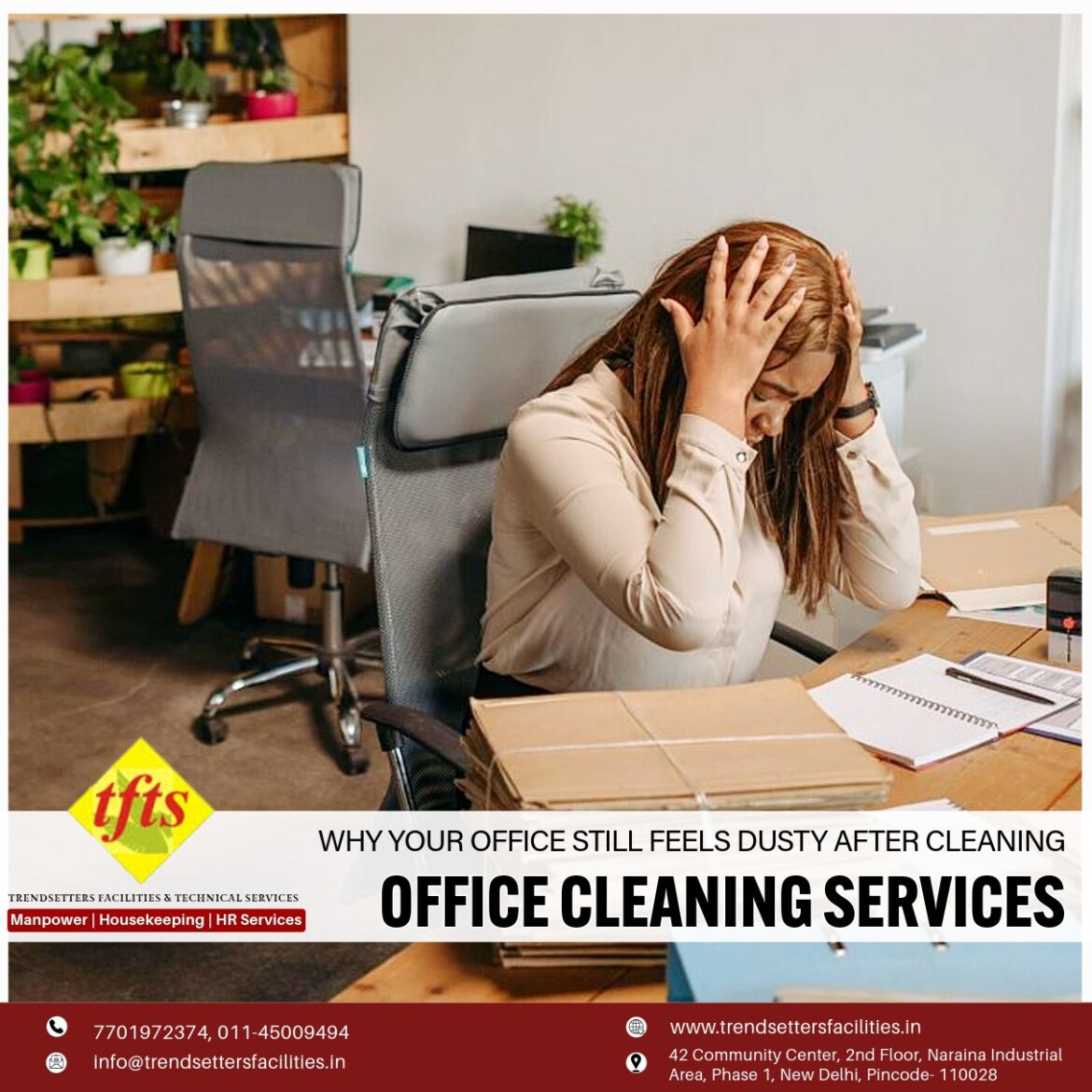
A freshly cleaned office should feel comfortable, hygienic, and ready for employees. Yet, sometimes, dust appears on desks shortly after wiping, settles around computer equipment, or collects in corners despite regular housekeeping.
This can happen when cleaning focuses mainly on visible surfaces while dust trapped in upholstery, ventilation systems, carpets, and less accessible areas remains undisturbed. In some cases, ineffective cleaning tools or incorrect techniques may even redistribute dust instead of removing it.
Professional housekeeping helps address these issues through systematic cleaning, suitable equipment, and consistent maintenance, explains Trendsetters Facilities and Technical Services (TFTS), a housekeeping services provider serving Delhi, Gurugram, NOIDA, and Faridabad.
What Are the Common Sources of Dust in Offices?
Office dust can come from outdoor air, footwear, clothing fibers, paper, packaging materials, and everyday movement. Open windows, frequently used entrances, construction activity nearby, and poorly maintained air filters can increase the amount entering the workplace.
Carpets, upholstered chairs, curtains, storage areas, and cluttered desks can also trap dust and release it when disturbed. Areas behind cabinets, beneath desks, and around electrical equipment may accumulate particles because they are not cleaned regularly. Identifying these sources helps housekeeping teams focus on the areas contributing most to recurring dust.
“A clean office is not just about what looks spotless after housekeeping; it is about maintaining a consistently clean environment throughout the working day,” says a housekeeping industry professional. Says Mr. Atul Mahajan, Director of Trendsetters Facilities and Technical Services (TFTS) northern India’s most trusted housekeeping company for offices.
Why Does Dust Return Soon After Cleaning?
Dust may return quickly when cleaning methods move particles into the air rather than removing them. Dry dusting with unsuitable cloths, sweeping too aggressively, or using equipment with poor filtration can allow fine particles to settle on nearby surfaces again. Cleaning only visible areas can also leave dust in surrounding spaces. For example, wiping a desk without cleaning nearby shelves, blinds, or the floor may provide only temporary results.
Using appropriate microfiber cloths, suitable vacuum equipment, and a systematic cleaning sequence can help capture dust more effectively instead of spreading it around the office.
Can Air Conditioning and Ventilation Contribute to Office Dust?
Air conditioning and ventilation systems can circulate airborne particles when filters are dirty, poorly fitted, or not maintained according to the manufacturer’s recommendations. Dust may also accumulate around vents and return-air grilles.
However, ventilation systems are not always the primary cause. Outdoor pollution, indoor activities, building maintenance, and inadequate cleaning practices may also contribute. Facility managers should arrange regular inspection and maintenance of air filters and ventilation components. Where dust remains a persistent problem, checking the building’s ventilation and indoor air quality may help identify the underlying cause.
Which Office Areas Are Commonly Missed During Cleaning?
Housekeeping teams may overlook areas that are difficult to reach or not immediately visible. These include the tops of cabinets, window ledges, blinds, light fittings, corners, skirting boards, spaces beneath furniture, and upholstery.
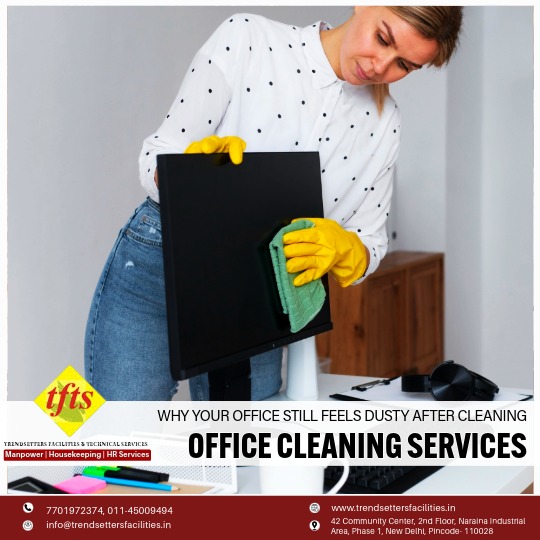
Computer keyboards, monitor stands, telephone equipment, and shared workstations can also collect dust. Cleaning these items requires appropriate methods that protect electronic equipment and follow workplace safety procedures.
A structured checklist helps ensure that both high-visibility surfaces and less accessible areas receive attention. Periodic detailed cleaning can complement daily housekeeping routines.
How Can Professional Housekeeping Reduce Recurring Dust?
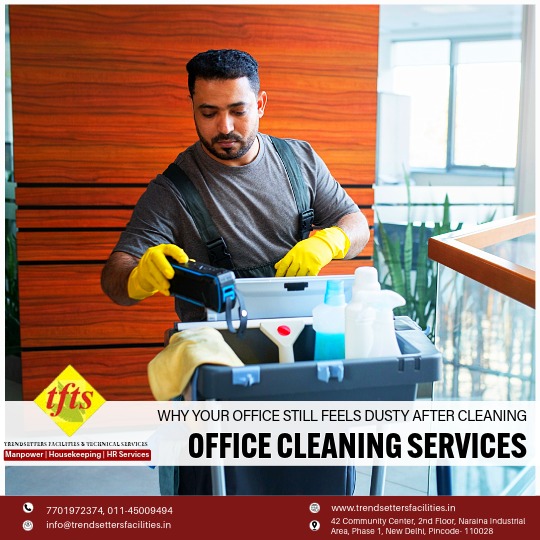
Effective office cleaning requires a consistent process rather than occasional surface wiping. Housekeeping teams should follow a planned sequence, use suitable tools, and clean from higher surfaces towards lower ones so that dislodged dust can be removed during subsequent steps.
Microfiber cloths and appropriately filtered vacuum cleaners can help capture particles. Damp wiping, where suitable for the surface, can reduce the dispersal associated with dry dusting.
Supervisors should also monitor cleaning quality, maintain equipment, and adjust schedules according to occupancy, foot traffic, and the office environment. High-use areas may require more frequent attention than spaces used occasionally.
How Can Offices Maintain a Cleaner Environment Between Cleaning Sessions?
Employees and facility managers can help limit dust accumulation through simple workplace practices. Keeping desks organised, reducing unnecessary paper clutter, using entrance mats, and storing supplies properly can make cleaning more effective. Spills and visible dust should be addressed promptly, while shared spaces should follow consistent housekeeping schedules. Building maintenance, including appropriate filter replacement and control of dust from repair work, is equally important.
When employees, facility managers, and housekeeping personnel work together, the office is more likely to remain clean between scheduled sessions. An office that feels dusty soon after cleaning may need a better cleaning process rather than simply more frequent wiping. Identifying dust sources, improving equipment and techniques, maintaining ventilation systems, and addressing overlooked areas can make a meaningful difference.
With systematic housekeeping and regular quality checks, businesses can maintain cleaner workspaces, support employee comfort, and reduce the recurring problem of dust settling soon after cleaning.

Trendsetters Facilities & Technical Services (TFTS) is India’s leading manpower & temporary staffing agency for the manufacturing, power, hospitality, automobiles, IT, and Banking sectors. At present TFTS is the leading manpower supplier to Indian SEZs in SIDCUL, Rudrapur, Udhampur, Haridwar, JAIPUR World. Some of the prestigious TFTS clients are Delhi Metro Rail Corporation, Bajaj Automobiles, Reliance Infrastructure, Haldirams, HCL.
Trendsetters Facilities & Technical Services (TFTS) offers a range of high-quality services from a team of specialized technicians for – Life Maintenance and Repair in Delhi NCR, Housekeeping services for homes, offices, industries, and institutions, HR Outsourcing, Payroll outsourcing services, offering ITI Certified CNC Operators for manufacturing industries, offering certified TIG welders, Marble polishing services, Fire hydrant system maintenance and more.
Email: info@trendsettersfacilities.in