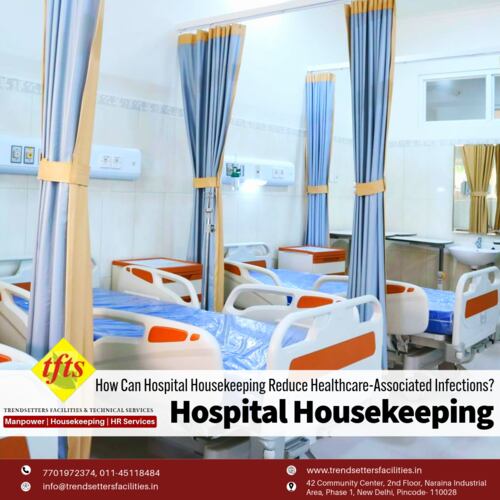
Healthcare-Associated Infections (HAIs) are infections that patients acquire while receiving treatment in hospitals or other healthcare facilities. These infections increase patient suffering, prolong hospital stays, raise treatment costs, and can sometimes become life-threatening.
While doctors and nurses play a direct role in treatment, hospital housekeeping teams form the backbone of infection prevention. Clean surroundings, proper waste disposal, and disinfection protocols are critical to stopping infection spread before it starts. Effective housekeeping is not just about cleanliness—it is a frontline defense system in modern healthcare as explained in the blog from TFTS which is a leading housekeeping services company for hospitals in Delhi, Gurugram and NOIDA.
Why Housekeeping is Important for Healthcare Units?
Hospitals are high-risk environments where bacteria, viruses, and fungi can easily spread. Patients often have weakened immunity, open wounds, or invasive devices like catheters and ventilators, making them more vulnerable to infections. In such settings, even a small lapse in hygiene can lead to serious outbreaks.
Housekeeping ensures that patient rooms, operation theatres, ICUs, corridors, and common areas remain sanitized. Proper cleaning reduces microbial load on surfaces such as bed rails, doorknobs, medical equipment, and floors. These are high-touch areas that can act as infection transmission points.
Additionally, proper biomedical waste management prevents contamination. Safe disposal of sharps, contaminated dressings, and biological waste protects both patients and healthcare workers. Housekeeping also improves air quality through dust control and proper ventilation cleaning, which is crucial for preventing airborne infections.
Beyond infection control, clean healthcare environments build patient trust. When patients see a clean facility, it increases confidence in the quality of care being provided.
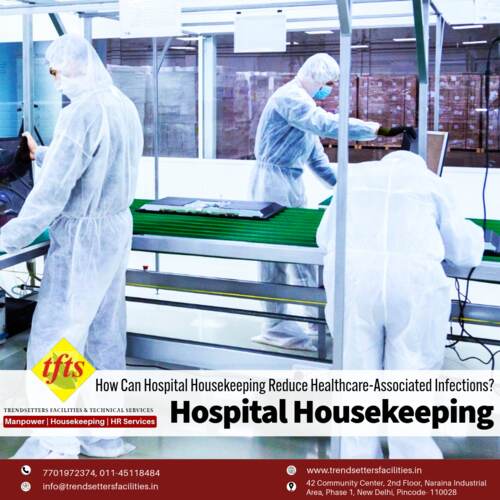
How Hospital Housekeeping Reduces Healthcare-Associated Infections?
Mr. Atul Mahajan, Director of Trendsetters Facilities and Technical Services (TFTS), one of the top housekeeping services agency in Delhi, Gurugram, and NOIDA for hospitals shares some points here.
Routine Cleaning and Disinfection Protocols
Hospital housekeeping plays a major role in preventing infections through structured cleaning and disinfection schedules. High-touch surfaces such as bed rails, switches, door handles, stretchers, and medical equipment are cleaned frequently using hospital-grade disinfectants. Critical areas like ICUs, emergency departments, and operation theatres require more frequent and stricter cleaning compared to general wards because patients in these areas are more vulnerable to infections.
Correct Cleaning Techniques and Cross-Contamination Prevention
Proper cleaning methods are just as important as cleaning frequency. Housekeeping staff must use the correct disinfectant dilution and follow recommended contact time to ensure germs are effectively killed. Color-coded cleaning tools help prevent cross-contamination. For example, separate mops and cloths are designated for toilets, patient care areas, and surgical zones to stop germs from spreading between areas.
Supporting Hand Hygiene Practices
Housekeeping teams indirectly support infection control by maintaining hand hygiene infrastructure. Ensuring hand sanitizers are refilled, washrooms remain clean, and hygiene supplies are always available encourages healthcare workers, patients, and visitors to follow proper hand hygiene practices. Good hand hygiene is one of the most effective ways to reduce infection transmission in hospitals.
Biomedical Waste Management
Safe biomedical waste handling is essential in infection prevention. Proper segregation of waste at the source reduces exposure to infectious materials. Regular waste collection, safe storage, and proper disposal prevent bacterial growth and environmental contamination. Proper sharps disposal also protects healthcare staff from injuries and infections.
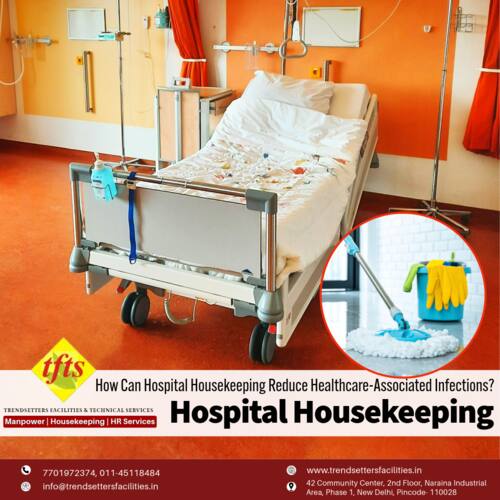
Air and Water Hygiene Maintenance
Maintaining clean air and safe water systems is another critical responsibility. Regular cleaning of air ducts, maintenance of HVAC systems, and monitoring water quality help reduce airborne and waterborne infections. This is especially important in high-risk areas like ICUs and operation theatres, where even minor contamination can cause severe complications.
Staff Training and Compliance Monitoring
Well-trained housekeeping staff are essential for effective infection control. Training programs help staff understand infection risks, proper use of personal protective equipment (PPE), and emergency cleaning procedures for blood or body fluid spills. Regular audits and supervision ensure that cleaning standards are consistently maintained.
Use of Advanced Cleaning Technologies
Modern hospitals are increasingly adopting advanced cleaning technologies to improve infection control. UV disinfection systems, electrostatic sprayers, and automated floor cleaning machines help enhance disinfection efficiency and reduce human error, ensuring higher safety standards.
Coordination with Infection Control Teams
Effective communication between housekeeping teams, infection control departments, and hospital management ensures uniform safety standards. Regular inspections, infection rate monitoring, and feedback mechanisms help identify high-risk areas and improve cleaning protocols continuously.
Hospital housekeeping is a critical pillar of infection prevention. By maintaining strict cleaning standards, managing waste safely, supporting hygiene practices, and using modern disinfection methods, housekeeping teams significantly reduce Healthcare-Associated Infections. In today’s healthcare environment, strong housekeeping practices are not optional—they are essential for patient safety, staff protection, and overall healthcare quality.
Trendsetters Facilities & Technical Services (TFTS) is India’s leading manpower & temporary staffing agency for the manufacturing, power, hospitality, automobiles, IT, and Banking sectors. At present TFTS is the leading manpower supplier to Indian SEZs in SIDCUL, Rudrapur, Udhampur, Haridwar, and JAIPUR World. Some of the prestigious TFTS clients are Delhi Metro Rail Corporation, Bajaj Automobiles, Reliance Infrastructure, Haldirams, HCL.
Trendsetters Facilities & Technical Services (TFTS) offers a range of high-quality services from a team of specialized technicians for –
Life Maintenance and Repair
Housekeeping Services for Homes, Offices, Industries, and Institutions.
HR Outsourcing
Payroll outsourcing services
ITI Certified CNC Operators
Certified TIG welders,
Marble polishing services,
Fire hydrant system maintenance and more.
To Get Quotes
Call Us at : 7701972374, 011-45118484
Email: info@trendsettersfacilities.in